

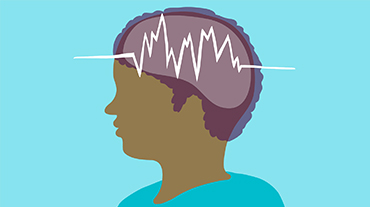
- Everyone’s brain has continuous electrical activity. When something goes wrong with this activity, your child may develop seizures.
- It occurs when the nerve cells in the brain send out sudden, excessive, uncontrolled electrical signals.
- Seizures can produce a variety of symptoms depending on what part of the brain is involved.
- Seizures can occur in the form of strange feelings in your stomach to uncontrolled rhythmic jerky movements of your entire body, called a convulsion.
Common symptoms before a seizure
|
Awareness, Sensory, Emotional or Thought Changes |
Physical Changes |
|
Smell |
Dizzy or lightheaded |
|
Sound |
Headache |
|
Taste |
Nausea or other stomach feelings (often a rising feeling from the stomach to the throat) |
|
Visual loss or blurring |
Numbness or tingling in the part of the body |
|
Déjà vu (a feeling of being there before but never have) Jamais vu (a feeling that something is very familiar but it isn’t) |
|
|
Pleasant feeling |
|
|
Fear/panic |
Common symptoms during a seizure
Awareness, Sensory, Emotional or Thought Changes
- Loss of awareness (often called “blackout”)
- Confused
- Periods of forgetfulness or memory lapses
- Distracted, daydreaming, staring
- Loss of consciousness, unconscious, or “pass out”
- Unable to hear
- Sounds maybe strange or different
- Unusual smells (often bad smells like burning rubber)
- Unusual tastes
- Loss of vision or unable to see
- Blurry vision
- Flashing lights
- Formed visual hallucinations (objects or things are seen that aren’t really there)
- Numbness, tingling, or electric shock-like feeling in body, arm, or leg
- Out of body sensations
- Feeling detached
- Déjà vu (feeling of being there before but never have)
- Jamais vu (feeling that something is very familiar but it isn’t)
- Body parts feels or looks different
- Feeling of panic, fear, impending doom (intense feeling that something bad is going to happen)
- Pleasant feelings
Physical Changes
- Difficulty talking (may stop talking, make nonspecific sounds, continuous talking or speech may not make sense)
- Unable to swallow, drooling
- Repeated blinking of eyes, eyes may move to one side or look upward or staring
- Lack of movement or muscle tone (unable to move, loss of tone in neck and head may drop forward, loss of muscle tone in body and person may fall forward)
- Twitching or jerking movements (may occur on one or both sides of face, arms, legs, or whole body; may start in one area then spread to other areas or stay in one place)
- Rigid or tense muscles (part of the body or whole body becomes stiff like wood)
- Repeated non-purposeful movements, called automatisms, involve the face, arms, or legs, such as
- Lip-smacking or chewing movements
- repeated movements of hands, like wringing, playing with buttons or objects in hands, waving
- dressing or undressing
- walking or running
- Repeated purposeful movements (person may continue activity that was going on before the seizure)
- Convulsion (person loses consciousness, body becomes rigid or tense, then fast jerking movements occur)
- Losing control of urine or stool unexpectedly
- Sweating
- Change in skin color (looks pale or flushed)
- Biting of tongue (from teeth clenching when muscles tighten)
- Difficulty breathing
- Increased heartbeats
About ten percent (10%) of people will have a seizure at some time in their life. Some of those people will develop epilepsy.
Once a person has had at least two episodes of seizures that were not provoked by something such as fever, illness, or withdrawal from drugs or alcohol he/she will be diagnosed with epilepsy.
Epilepsy is more common in children under the age of five years and adults over the age of 65 but can occur in anyone at any time in their life.
Once someone has one seizure, there is about a 50% chance that they will go on to have another seizure. Fifty percent (50%) of those people will have their second seizure within six months and 80% within two years. After having two seizures, most children (80%) will have another seizure within four years.
Fever (seizures that are provoked with fever in the age group between six months to five years of age in normally developing children are not considered epilepsy. Brains of children between six months and five years of age are sensitive to fever)
When seizures are not brought on by fever or another event, it is an epileptic seizure. There are below mentioned causes for epilepsy:
- Birth asphyxia (delay cry at birth)
- Brain infection/meningitis/ meningoencephalitis
- Genetic epilepsy
- Head injuries
- Pediatric stroke
- Metabolic causes
- Brain tumors (rare etiology)
Brief seizures are not harmful, but injury is the risk as most children are not aware that they are having a seizure. Daily seizures can hamper daily routine activities. A seizure lasting longer than 30 to 60 minutes may injure the brain but this is a rare situation.
Epilepsy is diagnosed based on clinical history and examination. Electroencephalogram (EEG) is done to pick up brain electrical activity and it is also helpful to diagnose epilepsy syndrome.
Additional imaging tests like MRI brain/ CT scan are also done to know the cause of epilepsy.
Epilepsy is a common condition affecting the brain, and it is more common in children compared to adults.
There are 50 million people living with epilepsy worldwide, and most of them reside in developing countries. About 10 million persons with epilepsy are there in India. It is estimated in various studies that the overall prevalence of epilepsy in India is 5.59-10 per 1000. *
* (Ann Indian Acad Neurol. 2014 Mar; 17(Suppl 1): S3–S11, doi: 10.4103/0972-2327.128643)
Parents or caregivers should stay calm and not panic. Your main focus should be to prevent injury to your child as he/she will not be in a normal consciousness state.
As soon as you know your child is starting to have a seizure:
- Keep your child in a safe area or soft surface and put her/him in the lateral position, so that she/he will not aspirate the ingested food.
- Kindly observe your child’s behaviour and movements, document the duration and if possible, kindly do video recording of the event.
- Do not try to stop or restrain their movements and don’t dare to put your fingers inside your child’s mouth
Drowning is the one cause of injury from seizures. Never leave your child alone in a bathtub or near ANY water. A child can drown in less than an inch of water.
Older children usually prefer to shower and can be unsupervised but they need to:
- Remove the drain stop if they are showering in a tub.
- Leave the bathroom door unlocked.
- Make sure someone is in the house when they are showering.
No child or teen should ever swim unsupervised:
- Parents should watch all young children and be within reaching distance of them in the water.
- Older children and teens may swim with a buddy with a lifeguard present. The buddy should know how to recognize a seizure and be able to call for help if needed.
Other safety precautions include:
- When children are riding bikes, skateboarding, or rollerblading, they should always wear a protective helmet.
- Children should avoid heights. They should not play on high playground equipment or climb trees, and they should not sleep on the top bunk of a bunk bed.
- Water heaters should be set to no more than 120 degrees F. to prevent a burn.
- Older children should not cook using the stovetop without an adult watching.
- If a child’s seizures are not well controlled and are occurring on a daily or weekly basis, greater precautions may be necessary such as not allowing any water activities and bike riding.
- Some children who have frequent seizures resulting in falls and frequent injuries may benefit from wearing a protective helmet during any physical activity.
- Talk to your child’s neurology provider about what precautions they recommend for your child.
Yes, you can prevent some form of epilepsy, which is frequently common in developing countries. There are some below-mentioned ways for same:
-
- Have a healthy pregnancy. Some problems during pregnancy and childbirth may lead to epilepsy. Follow a prenatal care plan with your healthcare provider to keep you and your baby healthy.
- Prevent brain trauma
- Lower the chances of stroke and heart disease.
- Regular vaccinations
- Wash your hands and prepare food safely to prevent infections such as cysticercosis.